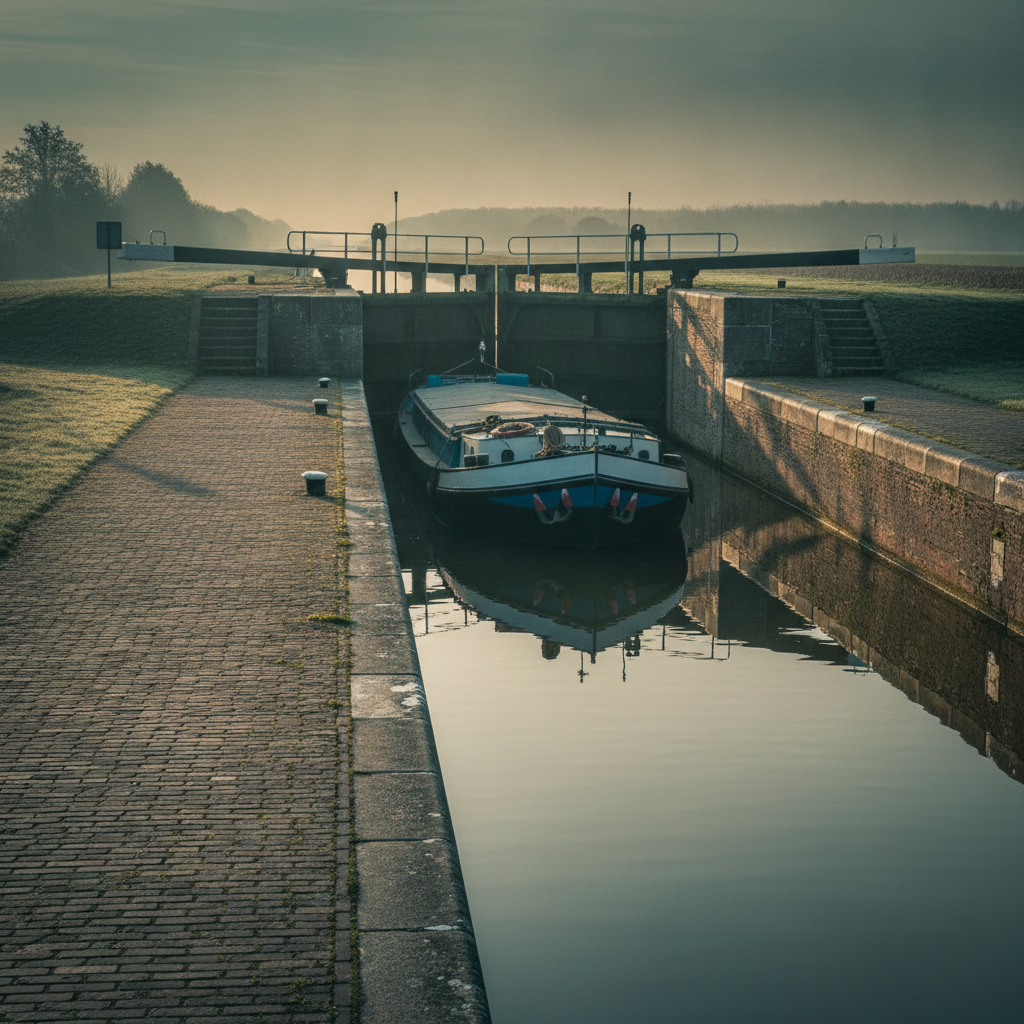
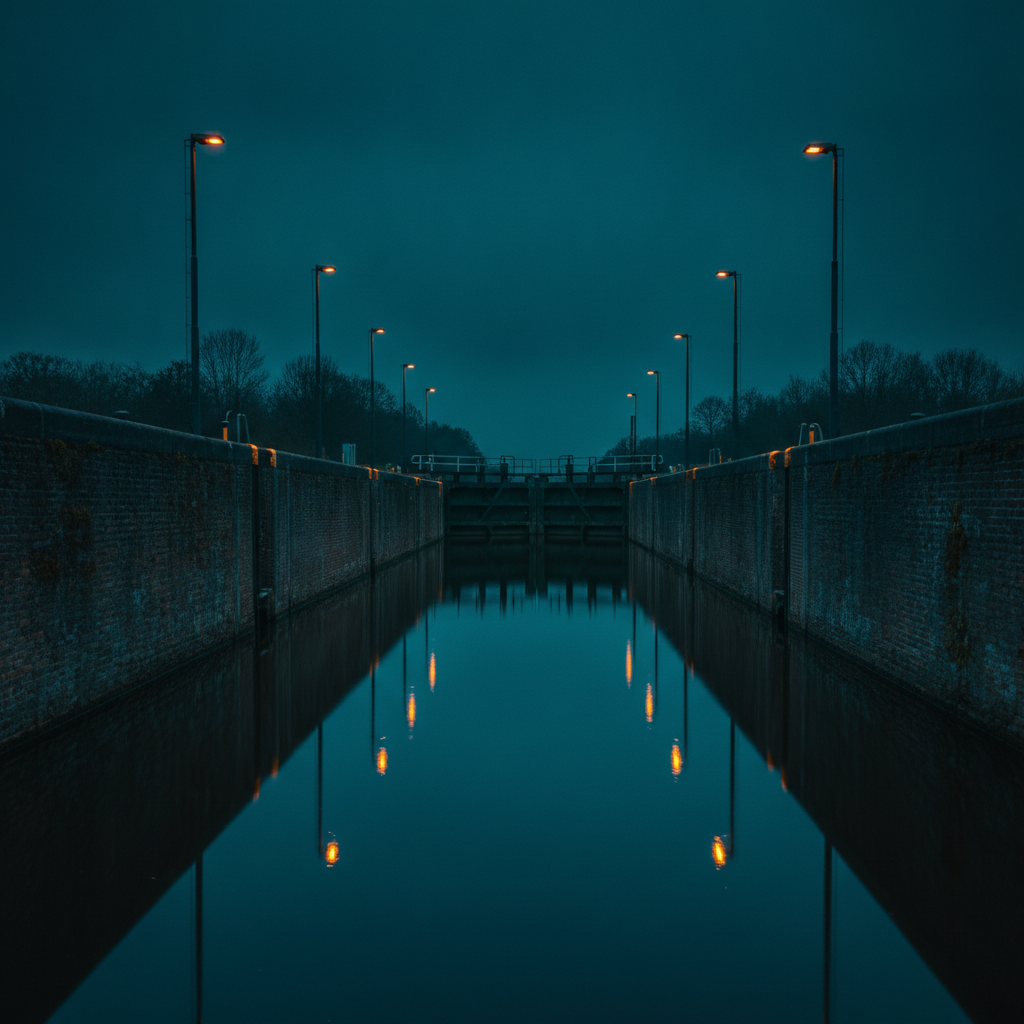
On the Zuid-Willemsvaart canal, just south of the centre of Weert, sits a lock that has looked much the same since 9 May 1932. Lock 16 was built between 1930 and 1932 when the canal was modernised. Almost a century later the complex is on the list for a major overhaul, and that makes it more than a technical job. Parts of the lock complex have held national monument status since 2003. Rijkswaterstaat therefore needs not only a contractor but also a permit from the municipality of Weert. And with that, a stakeholder question comes into focus that lies dormant beneath many assets in the renewal programme yet rarely surfaces so sharply: how do you renew infrastructure that is also heritage?
A lock with dual status
Technically, Lock 16 is a navigation lock on the Zuid-Willemsvaart, the waterway that links ‘s-Hertogenbosch through Limburg to the Belgian Meuse basin. It still locks commercial and leisure vessels through every day. But the lock is also cultural heritage: its architectural-historical value was documented in research commissioned by Rijkswaterstaat itself, and the monument status dates from 2003. That dual status, a working part of the main waterway network and a protected monument, defines the room the project has to manoeuvre in.
The renovation falls under the national Replacement and Renovation (V&R) programme, through which Rijkswaterstaat is tackling thousands of bridges, some twenty tunnels and nearly ninety locks dating from the 1950s, 60s and 70s in the coming years. Lock 16 is older than most of those assets, and it is precisely that age that brings the heritage question with it. The contract has been awarded to a consortium of Istimewa Elektro, Mourik Infra and Yunex Traffic, carrying out a larger renovation and maintenance package on waterways in North Brabant and Central Limburg. Construction is scheduled to start in week 35 of 2026: 24 August.
What is actually happening
The intervention focuses on maintenance, safety and technical modernisation. In concrete terms it includes refurbishing the lock gates, which should then last another fifteen to twenty years, and renewing the operating, control and monitoring systems. Five new camera masts will be installed around the lock to improve sight lines and remote operation.
That last point illustrates the tension. A lock from 1932 was designed to be operated on site; a modern V&R renovation brings remote control, cameras and new cabinets. All those additions are functionally necessary, but they touch the protected appearance. Five new masts in the immediate surroundings of a national monument are not a detail a heritage committee overlooks. It is precisely at this interface, modernisation that visibly changes the historic asset, that the stakeholder work takes place.
The heritage layer on top of the usual complexity
In an ordinary lock renovation, the key stakeholders are typically the waterway users, the surrounding businesses and the road authority. With a monument, a party joins that formally has a say: the municipality as competent authority for the environmental permit, advised by a monuments or heritage committee. That changes the nature of the process.
First, the assessment framework shifts. The question is no longer only “is this technically and safely sound”, but also “are the monumental values preserved”. That calls for a cultural-historical justification in the permit application, hence the architectural-historical research Rijkswaterstaat commissioned. Anyone who draws up that study only at the end of the design risks the committee rejecting interventions that have already been worked out.
Second, the timeline changes. An environmental permit for a national monument follows its own procedure and advisory moment. For a V&R project with a tight construction schedule (here, execution from late August) permitting is therefore not a formality afterwards but a critical path that must be secured early. The lesson from comparable delays elsewhere in the renewal programme, such as at the Koninginnensluis, is that underestimated procedures and disappointing findings on an old structure can push the entire schedule.
Third, the local story carries more weight. A lock that has shaped the face of a place for almost a century is, for Weert, not just infrastructure but recognition. The Zuid-Willemsvaart is even touristically charged, with heritage routes running along it. That means “the lock is being torn up” lands differently locally than an anonymous post-war concrete lock. Building support here requires a narrative that connects preservation and renewal rather than pitting them against each other.
A corridor, not a single asset
Lock 16 does not stand alone, either. Rijkswaterstaat is tackling the Zuid-Willemsvaart as a whole: after the work on Lock 16 was completed on schedule, Lock 15 is next. For the waterway user, what counts is not a single lock but the navigability of the entire corridor. That is a recurring theme in the renewal programme: whoever communicates asset by asset misses the picture the skipper has of a string of closures back to back.
For stakeholder management this means the planning of Lock 16 and Lock 15 must be coordinated, closures bundled and communicated predictably, and inland shipping informed in good time. A lock is a bottleneck; two locks in quick succession on the same waterway call for corridor thinking rather than asset-focused communication.
What this project shows
The renovation of Lock 16 is, in scale, a modest project within the multi-billion-euro V&R challenge. That is exactly why it is illustrative. A growing share of the structures due for renewal dates from the interwar or early post-war years, and some of them enjoy monument protection. At each of those assets the heritage layer will return: an additional competent authority, a cultural-historical justification, a monuments committee, and a local community that sees the asset as its own.
For the stakeholder manager the contours are clear. Bring the heritage interest in not as an afterthought but as a design starting point: let the architectural-historical research help shape the intervention rather than merely test it afterwards. Secure the permitting procedure as a critical path, not an administrative final step. And tell a story in which modernising and preserving go together, because a lock that can serve another twenty years and retains its monumental character is precisely what a community expects of its heritage. Renewing what is valuable without losing what made it valuable: for a national monument that is not a side issue of the project, but its core.
Sources
- Rijkswaterstaat - Zuid-Willemsvaart: renovation works Lock 15 and Lock 16
- Weert de Gekste - Rijkswaterstaat to carry out major renovation of Lock 16 in Weert
- Monumenten.nl - Lock 16, Weert
- Binnenvaartkrant - Lock 16 gates good for another 15 to 20 years
- Rijkswaterstaat - Multi-year overview of the renewal programme for bridges, tunnels and locks 2026-2030