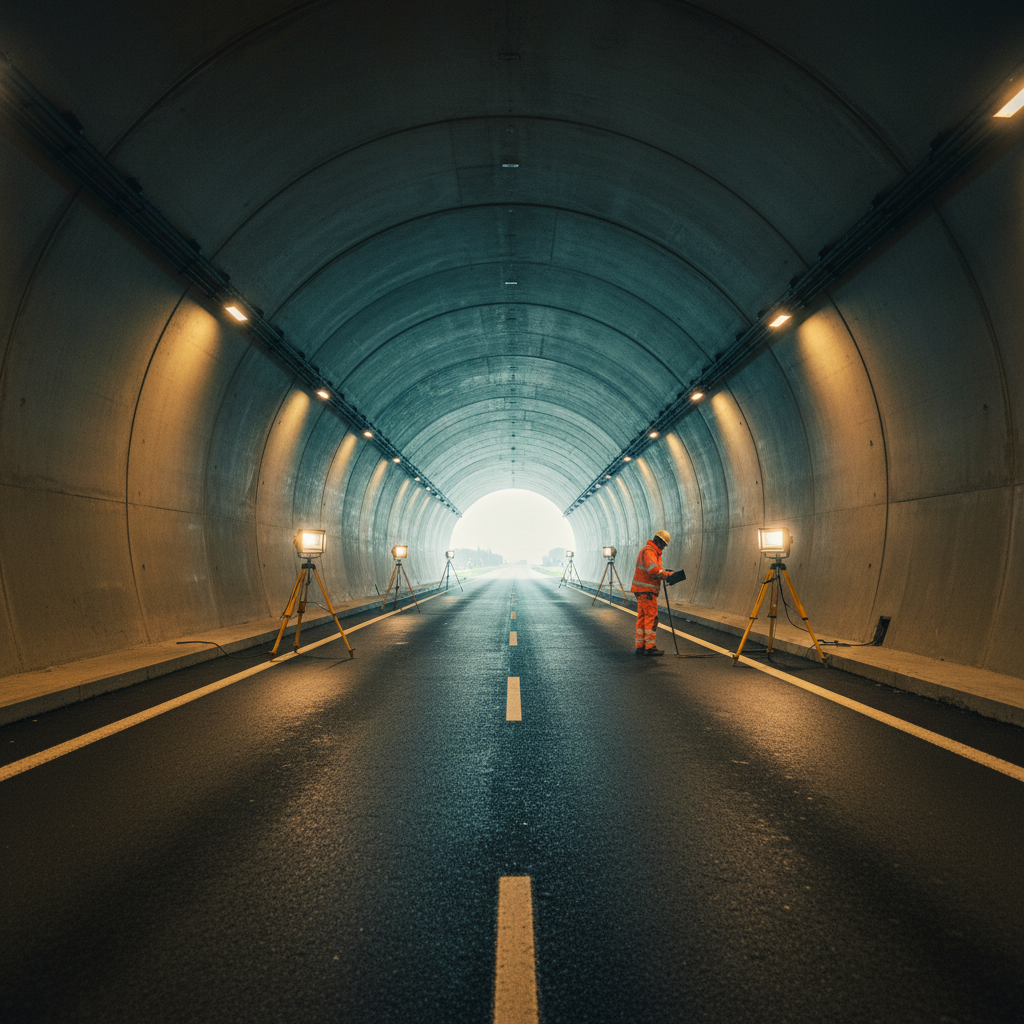
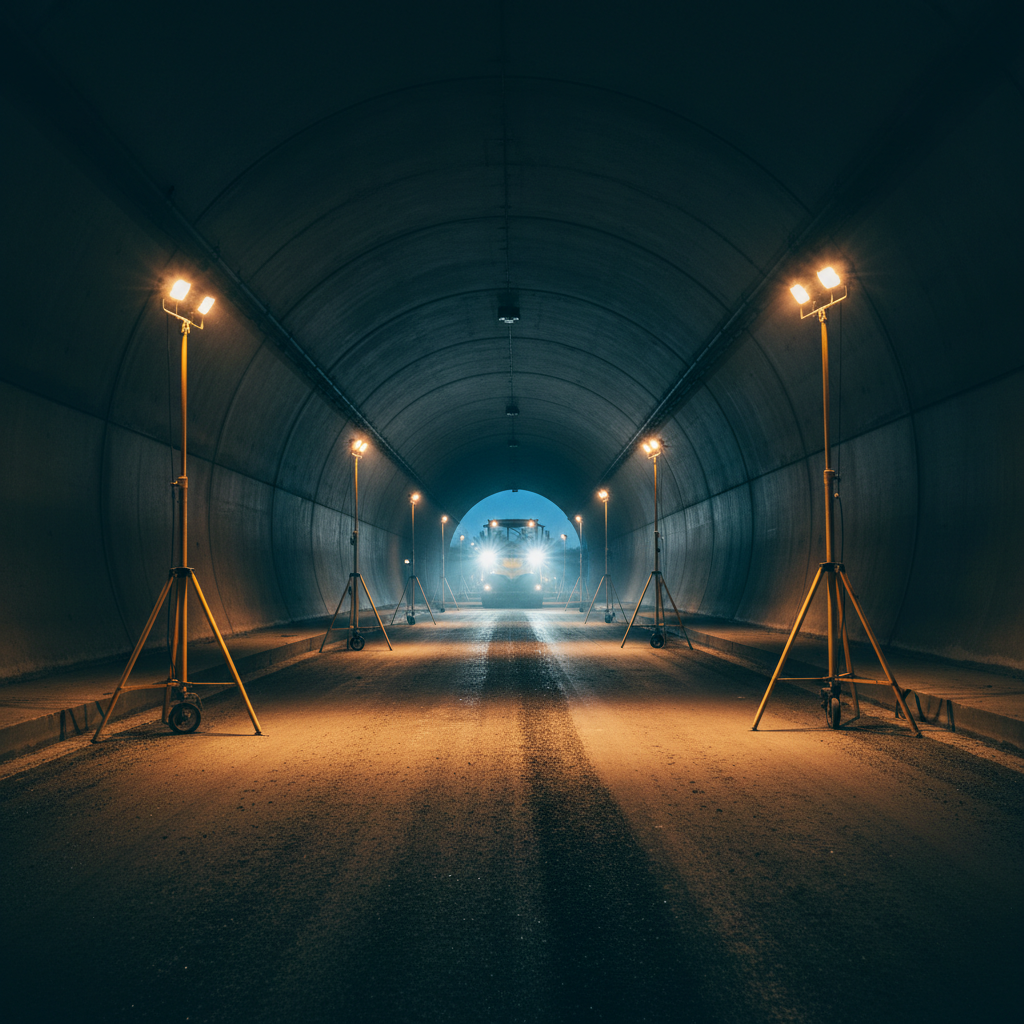
At 5:00 am on 20 April 2026, the Vlaketunnel on the A58 reopened to traffic. For eleven days the tunnel near Kapelle had been completely shut — both bores, both directions, with no equivalent alternative within the province of Zeeland. During the closure, contractor KWS Infra replaced asphalt, expansion joints, drainage grates and crash barriers, repaired concrete and joints along the tunnel walls, and tested every system before reopening. The January announcement had been blunt: there would be disruption, and it would be substantial.
What stands out in the week after reopening is how little escalation there has actually been. No road blockades, no court cases, no parliamentary questions. There were complaints, peak-hour delays exceeding sixty minutes, and serious concerns in advance — but no rupture of the public trust that Rijkswaterstaat and KWS Infra need to carry into the next project. For a closure of this scale that is a result worth examining, particularly because the renewal and replacement programme will deliver dozens of comparable projects between now and 2030.
Six lessons from the Vlaketunnel approach that apply to almost any other renewal closure.
1. The choice between “short and painful” or “long and phased” is a stakeholder choice, not an engineering one
One strategic question dominated the preparation: do we close completely for ten consecutive days, or do we phase the work over a much longer period with partial closures and weekend shifts? KWS Infra opted for the first: simultaneous work in both tunnel bores, closed for as short a time as possible. Both options were technically feasible.
The choice for the short variant is — perhaps surprisingly — primarily a stakeholder decision rather than a technical one. A long phasing with night closures generates months of uncertainty for residents, businesses and logistics, with constantly shifting accessibility. Ten days of pain on dates known well in advance is something most stakeholders can plan around; three months of unpredictability is not. That trade-off belongs on the contractor’s drawing board, but only works if the stakeholder manager is in the room early in the design phase. Anyone who only raises this conversation during scheduling has effectively already chosen the long variant.
2. Start communicating before there is anything to communicate
The first information evenings about the Vlaketunnel closure were held well before a definitive date had been set. That sounds counter-intuitive — what do you communicate when the schedule is still uncertain? The answer: that the closure is coming, that it will be significant, and that the project team is working to limit the impact.
That early opening move accomplishes two things at once. It absorbs the initial shock before it lands at an inconvenient moment via a press release or social media, and it opens the door for stakeholders to raise concerns that would otherwise only surface during execution. The project bus that toured the region, the meetings with local businesses, and the alignment with emergency services and defence were effective in part because they did not start in March 2026, but in the second half of 2025. Communication is not the closing chapter of planning; it is the opening one.
3. Travel information only becomes effective when you ask for behavioural change, not just attention
A yellow warning sign reading “tunnel closed 9-20 April” mostly reaches people who already knew. The deployment of Ask&GO as a personal travel advice service around the Vlaketunnel closure worked precisely because it went beyond notification: road users could discuss their specific route, departure time and alternatives, and received tailored suggestions to work from home, travel earlier or later, or detour via Bergen op Zoom.
That is a different approach from the traditional “broadcast as widely as possible” model. It accepts that part of the travelling public will not be reached through mass channels, and that those who are reached primarily need help making their own decision. For a stakeholder manager this means the success of a communication campaign is no longer measured by reach (eyeballs on the sign), but by behaviour — how many trips were actually shifted, how many drivers chose a different time slot before the closure even began? That requires traffic models and monitoring during the closure, not just media metrics beforehand.
4. Do not dismiss concerns about emergency scenarios — address them head-on
Local residents’ concerns were not only practical (“how do I get to work?”), but also fundamental: what if something serious happens during the closure — a natural disaster, a major incident, an evacuation of South Beveland? That concern sounds exaggerated until you realise the Vlaketunnel is effectively the artery between Walcheren, South Beveland and the rest of the country.
The approach that worked here was not to brush this concern aside but to answer it concretely: there were agreements with the regional safety authority, the tunnel could be reopened to emergency traffic within an agreed timeframe, emergency services had a contingency plan if patient transport over the A58 became impossible, and the maritime sector had agreements via ZRTI regarding the Vlakebrug and Postbrug bridges. The reverse lesson holds equally: a stakeholder manager who dismisses emergency scenarios as “exceptional” loses trust the moment such a scenario materialises, even if it never does. The reassurance comes from showing that the question has been considered.
5. Coordinate in parallel with all infrastructure managers, not only your own organisation
The Vlaketunnel does not stand alone. During the closure, parts of the N289, the Dijkwelseweg, the Noordhoeksewegeling and the road between Kruiningen and the A58 junction were also temporarily closed — not by Rijkswaterstaat, but by the province of Zeeland and the relevant municipalities — to improve through-traffic on the N289 and prevent rat-running through villages. The Vlakebrug and Postbrug were partially restricted for shipping to give priority to road traffic.
This kind of coordination between road authorities is not automatic in a renewal project. Each authority has its own decision-making process, its own permitting trajectory and its own stakeholder questions. A stakeholder manager who limits themselves to their own scope — the tunnel itself — places the success of the project in someone else’s hands. The practical conclusion is that stakeholder direction on projects of this kind does not belong with a single party but at a table where Rijkswaterstaat, the province, municipalities, the safety authority and emergency services align their planning at the same time. Preferably a year in advance, not six weeks.
6. A closure ends with the evaluation, not with the reopening
On 20 April the tunnel reopened. For traffic, the project is over at that point. For stakeholder management, the part most often skipped begins: the structured evaluation with the surroundings. What did residents, businesses, freight operators, emergency services and municipalities experience? Which messages landed, and which did not? Where did rat-running occur in spite of the closed alternatives? Which unexpected effects — a transport company permanently shifting its delivery route, a village that was quieter during the closure and wants to keep it that way — are now known?
This evaluation is not an internal quality exercise; it is an investment in the next closure. Rijkswaterstaat’s renewal programme contains dozens of comparable projects up to 2030 — including the Tholensebrug, IJsselbrug, Algerabrug and Papendrechtsebrug. Their surroundings will largely differ from those of the Vlaketunnel, but the patterns will not: businesses asking about travel times, emergency services wanting scenarios, drivers needing help choosing, municipalities needing to adjust their local roads. Anyone who completes the Vlaketunnel evaluation properly is writing the first half of the playbook for the next project.
Conclusion
The Vlaketunnel closure was technically a routine job within Rijkswaterstaat’s renewal programme: planned major maintenance, a familiar contractor, a short full closure. Socially, it was anything but routine. Reducing an island province to a single arterial road for eleven days demands an approach in which stakeholder and environmental management is not a separate workstream, but a design constraint from the very first moment.
The six lessons above are not specific to tunnels, and not specific to Zeeland. They apply to every renewal closure where one infrastructure object is so dominant that taking it out of service affects the mobility of an entire region. Dozens of such closures are coming over the next few years. Anyone who still treats stakeholder management as a communications workstream that joins the project somewhere along the way is poised to make the mistakes that the Vlaketunnel approach specifically avoided.
Sources
- Rijkswaterstaat — A58: major maintenance Vlaketunnel
- Rijkswaterstaat — A58: full closure Vlaketunnel; 9-20 April 2026
- Rijkswaterstaat — Multi-year overview renewal programme bridges, tunnels and locks 2026-2030
- KWS Infra — Vlaketunnel (Magazine 2026-1)
- Province of Zeeland — Major maintenance Vlaketunnel (A58)
- Omroep Zeeland — Resident concerns about Vlaketunnel closure
- ZRTI — Temporary closure Vlaketunnel
- MAPtm — Travel advice service Ask&GO