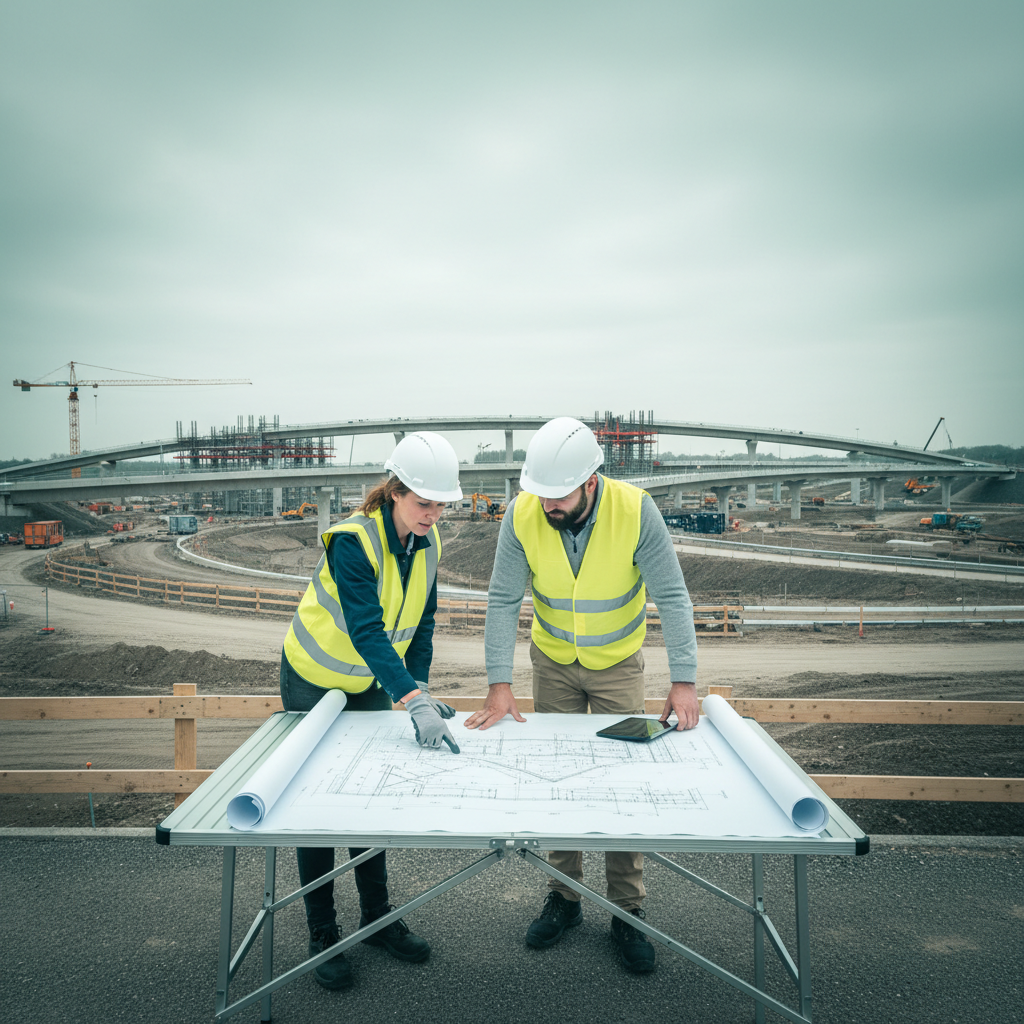
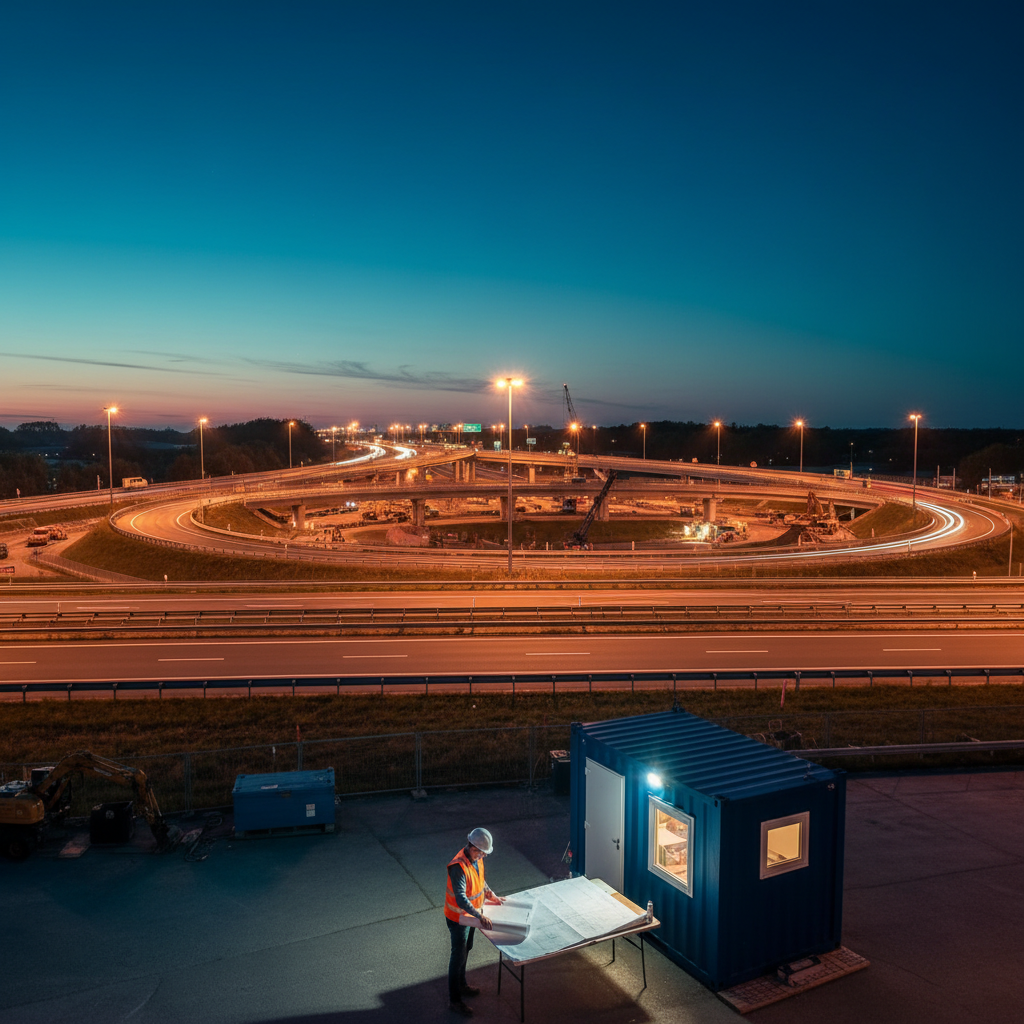
On a business park along the A1 motorway, not far from the Hoevelaken interchange, a sign has stood for years. It shows an image of a wide, modern highway. Below it: a project name, a contact address, a promise. The sign has faded in the sun. The work never came.
Hoevelaken is one of the seventeen MIRT projects that the Ministry of Infrastructure and Water Management paused in 2023. The trigger: a combination of nitrogen blockades, financial shortfalls and a severe shortage of qualified staff. One in three priority infrastructure projects on the national agenda was suddenly on hold. Residents, municipalities and provinces that had spent years participating in feasibility studies, public consultation processes and administrative consultations received a letter: the project is temporarily suspended.
That notification was not the end of the stakeholder management challenge. It was the beginning of a new one.
From exploration to standstill
The seventeen paused projects are at various stages of development. Some were still in the exploration phase; others had already passed the Route Decision (Tracébesluit). What they share: all are part of the Multi-year Infrastructure, Space and Transport Programme (MIRT), and all had been presented to residents, administrators and regional stakeholders as concrete plans.
That is what fundamentally distinguishes a MIRT pause from a project that never got off the ground. Information sessions were held. Kitchen-table conversations took place. Administrative commitments were made. People adjusted their lives or businesses around a planned route that is no longer certain. And then: silence.
The restart approach for the seventeen paused MIRT projects, published by the Ministry of IenW in 2025, clearly outlines the conditions that must be met before a project can restart: demonstrable nitrogen capacity, secured funding, reconfirmed administrative commitment. These are the hard preconditions. But the approach also makes something else clear: most projects can only restart with the active cooperation of provinces — and that cooperation cannot be taken for granted.
The nitrogen challenge as a stakeholder management question
The nitrogen problem is rightly treated in policy documents as a technical and legal matter. It concerns nitrogen deposition on Natura 2000 areas, the additionality of mitigating measures, and the Council of State’s PAS ruling that swept away the legal foundation for dozens of permits.
But nitrogen is also a stakeholder management issue. Provinces that must reserve nitrogen capacity for infrastructure projects do not do so in a political vacuum. They weigh interests: the agricultural lobby, Natura 2000 managers, municipalities seeking housing space, farmers who view their emission reductions as negotiating capital. The stakeholder and environmental manager joining a province at the table for a project restart enters a politically charged arena — one in which the province itself is a stakeholder with its own interests and its own political pressures.
At Hoevelaken, this is concretely visible. The Ministry of IenW and the region agreed in the MIRT letter of January 2026 to jointly explore whether the nitrogen conditions can be fulfilled. That sounds cautious — because it is: the conclusion up to that point was that the conditions for a (phased) restart cannot currently be met.
One project per year — that is the restart ambition. In the current nitrogen context, this means each project must navigate its own political path through provinces, Natura 2000 managers and surrounding sectors.
The new Taskforce Agriculture, Nature and Nitrogen, established by the cabinet in April 2026, offers a potential breakthrough. The taskforce’s seven pillars include creating nitrogen capacity for strategically important national projects. Whether this will provide sufficient relief for the seventeen paused projects remains uncertain — but it does open a new policy channel.
What has happened to stakeholder relationships in the meantime
A project that has been on hold for two or three years does not return to the same environment in which it was paused. Stakeholders change. Aldermen are re-elected or replaced. Businesses relocate, expand or close. Concerned residents who were active participants at the time have become disillusioned or redirected their energy elsewhere.
Perhaps more significant: trust has been damaged. A participation process that ends in a pause feels like wasted time to those involved. The implicit message — “your input matters” — proved less true than suggested. When the project restarts, the burden of proof is reversed: it is not residents who must demonstrate willingness to engage, but the project organisation that must demonstrate they are taken seriously.
This requires more than a newsletter announcing the project is back on track. It requires active re-engagement: one-to-one contact with key stakeholders before the official restart, transparency about what has changed and what has not, and honesty about remaining uncertainties. That honesty — “we do not yet know when the route decision will become final” — is precisely what restores credibility.
The first restart: A27 Zeewolde–Eemnes
The first restart under the MIRT programme concerns the A27 Zeewolde–Eemnes feasibility study. This project, which aims to improve the connection between the A27 and the A1/A28 at Hoevelaken interchange, was selected because its nitrogen conditions are relatively more favourable than those of other paused projects.
The stakeholder approach for this restart faces a specific challenge: the feasibility phase was not yet fully completed in 2023. This means that route alternatives that were still open at the time of the pause must be reassessed — in an environment where location-specific interests may have shifted.
Project teams managing this restart benefit from a structured stakeholder analysis that explicitly maps the difference between the 2022–2023 environment and the 2025–2026 environment. Which administrators are still in post? Which businesses have arrived? Which concerns were present then and have since grown or diminished? This delta analysis — measuring the difference rather than starting from scratch — is more efficient than a completely new stakeholder inventory and builds on what was already established.
What this means for the broader challenge
The seventeen paused projects are a symptom of a broader tension in Dutch infrastructure planning: the ambition to build quickly consistently collides with the realities of nitrogen, capacity and administrative complexity. The acceleration agenda calls for more speed — but speed is only sustainable when public support keeps pace.
The risk with the current restart approach is that focus falls too heavily on the legal and technical conditions — nitrogen capacity, funding, route decision — and too little on the social and administrative conditions. A project that can legally restart, but whose public support has eroded, will encounter delays in the execution phase regardless: through formal objections, informal blockades, or local political resistance that translates into delaying tactics.
Stakeholder and environmental management at restart is therefore not supplementary to the restart approach. It is a precondition.
Outlook
The next two years will reveal whether the ambition of one restart per year is achievable. The Nitrogen Taskforce opens a door, but political implementation is complex. Meanwhile, pressure is mounting: the queue of paused projects is not getting shorter, and societal demands — housing, energy transition, accessibility — do not wait.
For stakeholder and environmental managers in the infrastructure sector, this creates a specific mandate: be prepared for restart before the formal decision is made. Map the stakeholder landscape again. Restore contact with municipalities and provinces. And ensure the project organisation is capable of communicating openly about uncertainties — because there will be plenty.
The information sign along the A1 near Hoevelaken may stand for a few more years yet. But the environment around that sign changes every day. Those who wait until the official restart to begin stakeholder management begin too late.