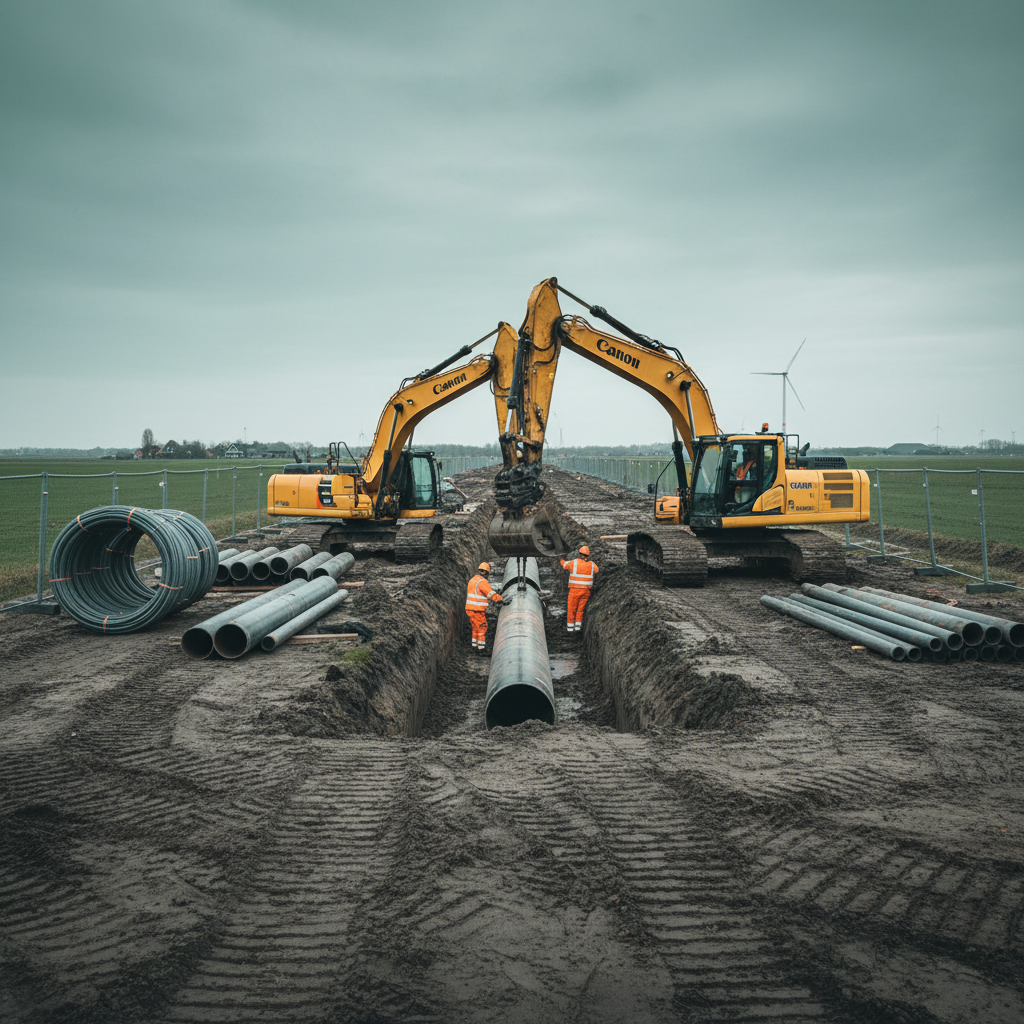
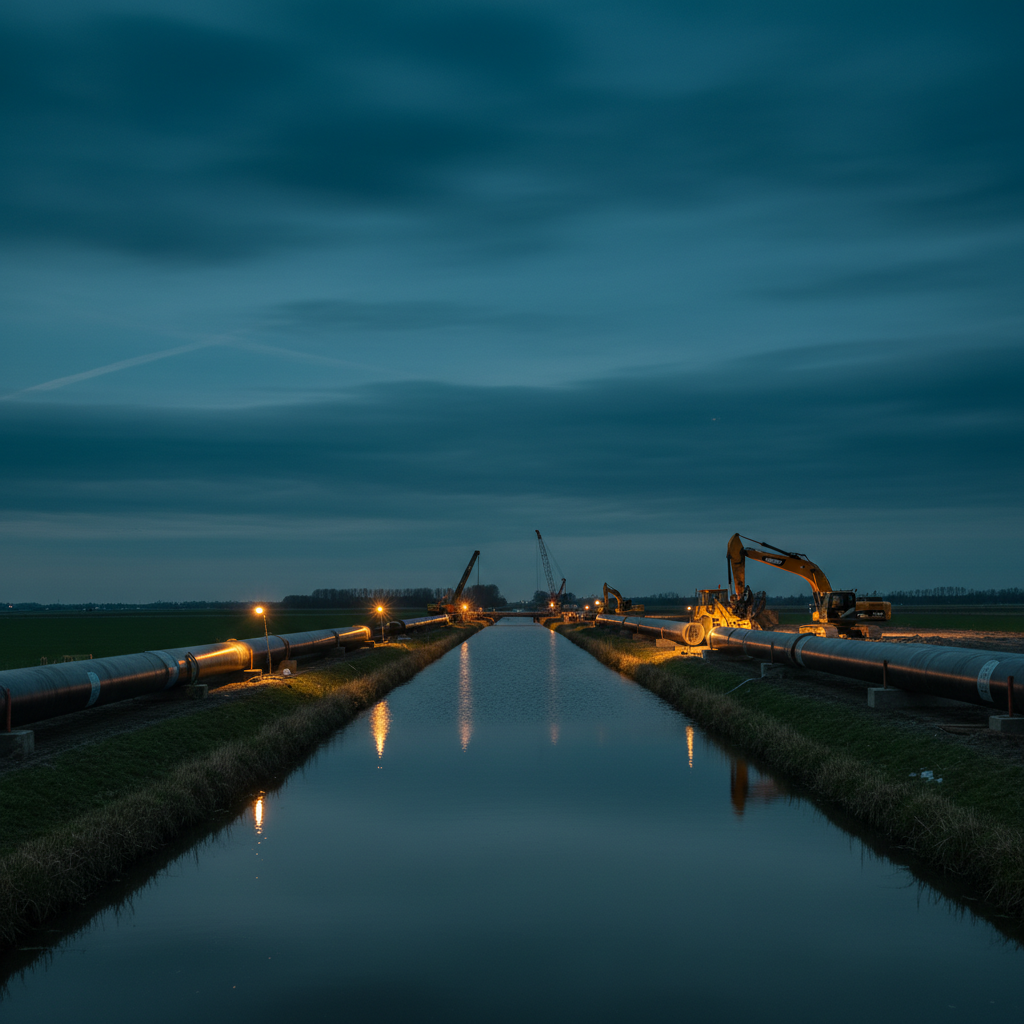
The Netherlands is embarking on one of the largest infrastructure projects of this decade: the construction of a national hydrogen network connecting five industrial clusters, from the port of Rotterdam to the north of the country. Hynetwork, a 100% subsidiary of Gasunie, is executing this project. The first 32 kilometres in the Rotterdam port area are already in the ground. At the same time, the challenges for stakeholder and environmental management along the route are considerable.
Why hydrogen and why now?
The energy transition requires not only more wind turbines and solar panels, but also new infrastructure to store and transport sustainable energy. Hydrogen plays a key role in this: it can store surplus electricity, serve as a feedstock for industry, and be used as a fuel in sectors that are difficult to electrify, such as heavy industry and maritime shipping.
The Dutch hydrogen network will largely be constructed by converting existing natural gas pipelines that are being decommissioned. This reduces construction costs and limits spatial impact. Nevertheless, new construction is unavoidable, particularly for connections between clusters and links with other countries via the Delta Rhine Corridor.
Planning status in 2026
In December 2024, Hynetwork published a revised roll-out plan. Nearly 60 responses were received from municipalities, provinces, industrial parties and local residents. After a careful consultation process, the plan was submitted in its final form to the Ministry of Climate Policy and Green Growth.
The schedule has three phases:
- Phase 1 (2025-2026): Connections in the coastal industrial clusters, including Rotterdam. The first kilometres are already operational.
- Phase 2 (up to 2030): Extension along the North Sea coast to clusters in the northern Netherlands and Zeeland.
- Phase 3 (2031-2033): Connection with the cluster in Limburg and cross-border links via the Delta Rhine Corridor.
Notably, the original 2030 target for a complete network has been revised to no later than 2033. This illustrates how complex the spatial and procedural challenges are, even when political and financial support is in place.
Stakeholder and environmental management along the hydrogen route
The construction of hydrogen infrastructure places high demands on stakeholder and environmental management, for several reasons.
Public risk perception among residents
Hydrogen is perceived differently by the public than natural gas. The flammable properties of hydrogen, combined with limited public familiarity, lead to heightened concerns among residents. Environmental managers must communicate proactively about safety measures, provide comparative frameworks (“hydrogen is safer than petrol in many respects”) while remaining honest about residual risks.
Participation sessions held in the context of the hydrogen network show that safety is by far the most frequently raised topic, followed by liveability during the construction phase and the economic opportunities for the region.
Reuse of gas pipelines: opportunities and complications
Reusing existing natural gas pipelines may seem to simplify stakeholder management: after all, a route already exists. But reality is more complex. Not all pipelines are suitable for conversion. Material inspections, modifications to fittings and ventilation points require access to plots of land that are not always freely accessible. Landowners must be approached, and agreements revised or newly concluded.
Moreover, residents’ expectation that “reuse equals no disruption” is not always justified. Works on existing routes can temporarily cause nuisance, particularly in areas accustomed to the invisibility of underground infrastructure.
Competent authority and permit procedures
The permit procedure for the hydrogen network was expedited through a General Administrative Order (AMvB) that took effect on 1 January 2026. For larger pipeline sections, competent authority has shifted from municipalities to the central government, simplifying coordination but also limiting local influence.
For environmental managers, this is a double-edged sword. On one hand, it reduces the risk of procedural delays through local objections. On the other, municipalities and residents may feel less heard, which can undermine public support. The challenge is to supplement formal participation structures with informal meetings and direct communication.
Coordination with other underground works
A particular challenge is coordinating with other projects in the subsurface. In many of the same corridors, new high-voltage cables, telecom infrastructure and sewer replacement projects are also planned. Uncoordinated works lead to double disruption for residents and higher costs.
In practice, environmental managers see opportunities in this interaction: a combined participation session for multiple projects can be more efficient and provide an integrated picture that better matches residents’ experience of their neighbourhood.
The role of regional and local stakeholders
Municipalities along the route have a dual role: they are simultaneously competent authorities (for local sections) and representatives of their residents’ interests. This dual role requires clear communication about which hat the municipality is wearing in which meeting.
Provinces play a coordinating role, particularly in relation to spatial integration in environmental visions and environmental plans. Under the Environment and Planning Act (Omgevingswet), provinces can issue instruction rules to steer municipal decision-making.
Industrial parties such as large chemical companies and energy producers are crucial stakeholders with a direct economic interest. They participate intensively in technical working groups but are sometimes less visible in public participation processes.
Nature and environmental organisations monitor ecological integration, particularly where the route crosses Natura 2000 areas or runs near sensitive water extraction areas. Here, the full environmental toolkit of the stakeholder manager is in play: ecological impact studies, mitigating measures and potentially compensation.
International dimension: the Delta Rhine Corridor
A distinctive aspect of the Dutch hydrogen network is the international connection via the Delta Rhine Corridor, a bundled infrastructure corridor from Rotterdam to Germany’s Ruhr area. This corridor bundles hydrogen, CO2, electricity and data in a single route.
Stakeholder management for cross-border projects requires extra attention. Legislation, participation styles and citizens’ expectations differ on either side of the border. Building trust with Dutch-German communities along the route requires multilingual communication and an understanding of local context.
Lessons for practice
Several lessons for stakeholder and environmental management can already be drawn from the first phase of the hydrogen network:
- Start early with stakeholder management, ideally in the exploration phase. Once route choices have been made, it is harder to build public support.
- Distinguish communication from participation. Informing people about safety is essential, but residents also want influence. Offer concrete opportunities to have a say on matters that can still be influenced.
- Work area by area. An industrial port area requires a different approach from a residential neighbourhood or a rural area with agricultural land.
- Integrate with other planning processes. Link the hydrogen project wherever possible to municipal environmental visions and regional energy strategies (RES) to create synergy and avoid duplication.
- Invest in technical knowledge within the environmental management team. Stakeholder managers who understand hydrogen technology are more credible in conversations with both technical and non-technical stakeholders.
Conclusion
The national hydrogen network is more than a technical project; it is a societal question about how the Netherlands organises its energy transition and who plays what role in it. Stakeholder and environmental management is central to this question: it bridges the gap between technical necessity and public acceptance.
With the first kilometres of hydrogen pipeline in Rotterdam now operational and construction well underway, now is the moment to learn from the experiences of the initial phase and embed those lessons in the approach for the years ahead. The energy carrier of the future demands stakeholder and environmental management of the highest order.
Sources
- Hynetwork - National hydrogen network, 2025 annual review
- Gasunie - National hydrogen network roll-out plan updated
- Netbeheer Nederland - Hydrogen in the energy system
- Hynetwork - Hydrogen network plans for the eastern Netherlands presented to the community
- Alles over Waterstof - Hydrogen network completed no later than 2033