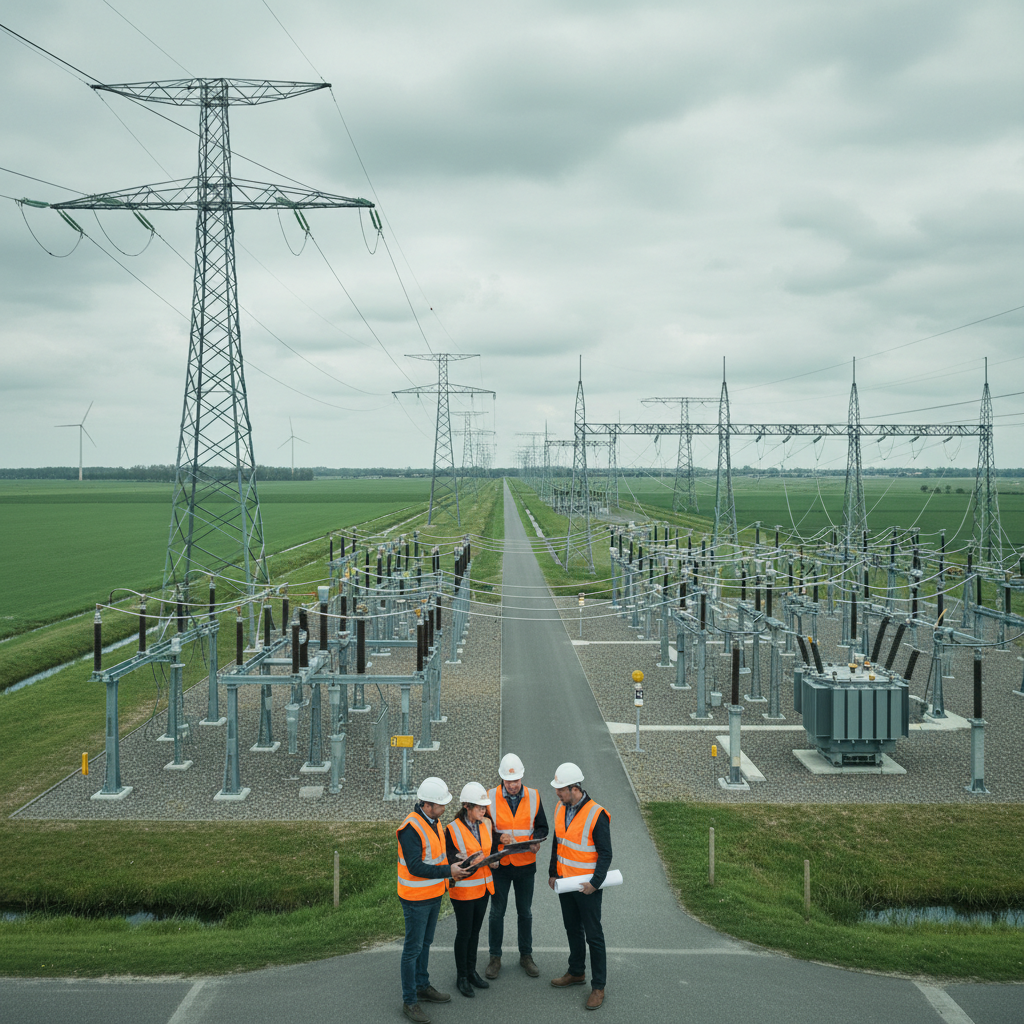
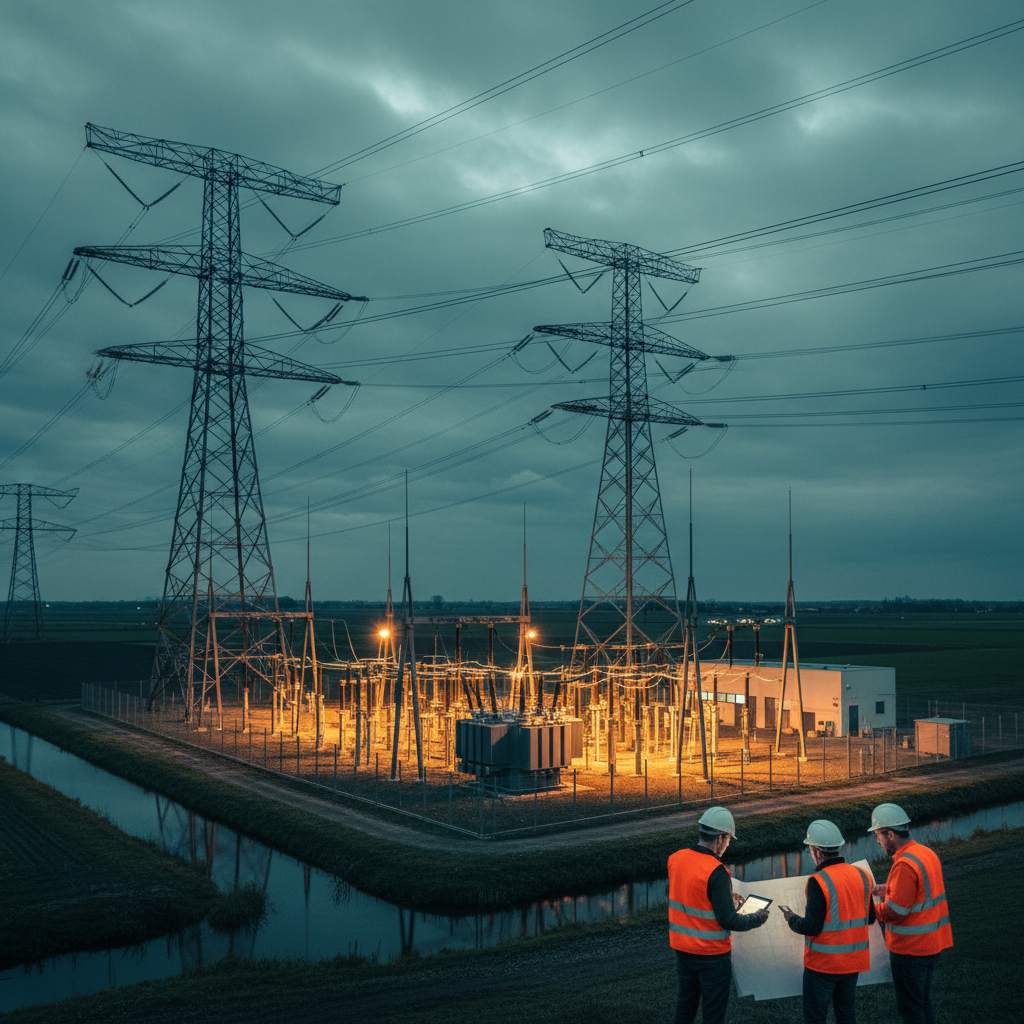
On 1 January 2026, a new era began for the Dutch energy sector: the Energy Act 2026 (Energiewet 2026) entered into force. This legislation replaces both the 1998 Electricity Act and the Gas Act, forming the new legal foundation for an energy system increasingly driven by renewable sources, digitalisation and flexibility. The implications extend far beyond tariff structures and connection procedures — they reach the very core of how energy infrastructure projects are planned, communicated and delivered.
For stakeholder and environmental management professionals working on high-voltage networks, underground cables, transformer stations or gas networks, the new act brings both challenges and opportunities.
From network management to system management
One of the most visible changes is terminological, yet substantively significant. The term “netbeheerder” (network operator) is replaced by “systeembeheerder” (system operator): a transmission system operator (TSO) for the national high-voltage grid — TenneT — and distribution system operators (DSOs) for regional grids such as Stedin, Liander and Enexis.
This renaming aligns with European regulation and reflects a broader role: system management goes beyond the physical network and encompasses information flows, congestion management and market facilitation. In practice, system operators receive more powers but also bear greater responsibilities towards society.
The connection obligation lapses during congestion
Perhaps the most far-reaching change for field projects is the abolition of the unconditional connection obligation. Until now, network operators were legally required to fulfil every connection request — regardless of whether sufficient transport capacity was available. This led to long waiting lists and the well-known grid congestion problems affecting large parts of the Netherlands.
Under the Energy Act 2026, system operators may refuse or postpone a connection request if the grid is overloaded. Moreover, so-called zero connections become possible — the physical connection is installed, but there is (for now) no transport capacity. This may sound paradoxical, but has clear logic: it decouples the laying of infrastructure from the availability of grid capacity, giving the system operator time to reinforce the grid without projects grinding to a halt.
Prioritisation replaces ‘first come, first served’
Another structural change is the end of the “first come, first served” principle. System operators can now give priority to:
- Congestion-reducing projects — connections that relieve rather than load the grid
- Basic services projects — hospitals, water treatment facilities, data centres for critical infrastructure
- Sustainability projects — connections for wind farms, solar parks and battery storage contributing to the energy transition
This has direct consequences for the communities surrounding projects. When a company in a region sees its application deferred while a wind farm elsewhere is connected without delay, it raises questions, discontent and sometimes legal proceedings. Stakeholder managers must communicate this change in the waiting queue in a timely and transparent manner.
Impact on stakeholder and environmental management in practice
Expectation management as a core competency
The combination of zero connections, prioritisation and regional congestion differences means that external communications around energy connections have become more complex. Residents and businesses waiting for a connection — for a heat pump, electric charging infrastructure or industrial electricity supply — need clear, honest communication about when they will be served and why others take precedence.
Stakeholder and environmental managers play a crucial role here. This is not only about projects under construction, but also about expectations surrounding projects that are deferred or delayed. This requires transparent stakeholder communication in which the new legal framework is explained without it sounding like an excuse.
Area-based approaches become more urgent
The new act encourages system operators to be more transparent about regional grid capacity. Platforms such as the regional capacity maps of Stedin and Liander are legally anchored. This gives stakeholder managers and area developers better insight into which regions do and do not offer opportunities for new connections.
In practice, this translates into more intensive collaboration with municipalities and provinces: which areas are being prioritised? Which environmental visions (omgevingsvisies) establish spatial reservations for energy infrastructure? And how do projects fit within Regional Energy Strategies (RES)?
Accelerating environmental processes at TenneT
TenneT, as transmission system operator, has explicitly announced that stakeholder and environmental management can be an accelerating factor in project delivery. By starting environmental studies and participation processes earlier — in the exploration phase, parallel to technical studies rather than sequentially — a time saving of seven to sixteen months per grid expansion project can be achieved.
This is a fundamental shift in project approach. Traditionally, stakeholder and environmental management was often seen as a “phase after the feasibility study”. The Energy Act 2026 and the urgency of grid expansion necessitate an integrated approach in which environmental managers form part of the project team from the outset.
Energy communities and local ownership
The Energy Act 2026 formally recognises energy communities as official market participants for the first time. Neighbourhood batteries, cooperative solar parks and local heat networks can now enter into contractual relationships with the system operator. This opens a new domain for stakeholder and environmental management: facilitating local energy initiatives that are both technically and administratively complex.
Municipalities and local cooperatives are often enthusiastic but lack the capacity for the required permitting procedures and technical coordination. This is where stakeholder and environmental managers can bridge the gap between societal ambition and procedural reality.
The role of the regulator: ACM
The Authority for Consumers and Markets (ACM) has been granted new powers under the Energy Act 2026, including the authority to hold system operators accountable for the pace of their investments. At the end of 2025, the regulator asked Enexis, Liander, Stedin and TenneT to submit improved investment plans, particularly for the expansion of the distribution grid.
For stakeholder and environmental managers, this creates pressure from multiple directions: system operators are encouraged to work faster, while the surrounding environment demands greater transparency and participation. Navigating between these demands — speed versus thoroughness, transparency versus decisions not yet taken — is precisely the core task of professional stakeholder and environmental management.
Limited investment capacity
A complicating factor is the budgetary context. In the MIRT letter of January 2026, the Dutch cabinet indicated limited possibilities for investing in infrastructure. This stands in tension with the enormous investment challenge for grid expansion: network operators together invest more than eight billion euros per year, but costs are rising faster than anticipated.
The expectation is that projects will be more selectively prioritised and that societal pressure on environmental processes will increase: precisely when resources are scarcer, public support becomes all the more valuable. A project that becomes mired in appeal procedures or is delayed by community resistance is one that wastes scarce capacity.
Conclusion
The Energy Act 2026 is more than a technical and legal exercise. It is a reorganisation of the energy sector with direct consequences for how projects are planned, communicated and delivered. Stakeholder and environmental management in this new landscape is no longer on the sidelines — it has become a strategic instrument for pushing projects forward faster and with greater public support.
For environmental and infrastructure professionals in the energy sector, this means: understand the new act, grasp the prioritisation logic, and help both system operators and the surrounding communities to navigate the changes. The energy transition requires not only new cables and substations — it demands new forms of collaboration.
Sources
- TenneT — New Energy Act 1 January 2026 lays foundation for future-proof energy system
- Netbeheer Nederland — Network operators: let 2026 not become a wasted year
- RVO — Measures to expand the electricity grid faster
- Solar & Storage Magazine — Regulator asks Enexis, Liander, Stedin and TenneT for better investment plans
- Dutch Government — MIRT letter January 2026: limited possibilities to invest in infrastructure
- Klimaatweb — The Energy Act: what changes from 2026?