At the Dike Workers’ Day on 2 April 2026 in ‘s-Hertogenbosch, the new HWBP Project Book 2026 was presented. The message was both hopeful and uncomfortable: from this year onwards, the Dutch Flood Protection Programme (Hoogwaterbeschermingsprogramma, HWBP) must structurally reinforce more than fifty kilometres of dike per year, while pace has lagged in recent years. 1,400 kilometres of primary flood defences and 400 hydraulic structures are on the list. The technical challenge is vast, but everyone who stepped onto the stage arrived at the same conclusion: the real bottleneck is not in the concrete, it is in the environment.
For several years, the HWBP has been working with a framework known as the “seven dilemmas of the dike worker”, a set of tensions that stakeholder and environmental managers encounter in almost every dike reinforcement project. At the Dike Workers’ Day, those dilemmas were weighed once again against the reality of 2026: an accelerated pace, a tight land market, increased resistance to major spatial interventions, and a water authority that is simultaneously executor and neighbour of residents whose families have lived along the dike for four generations.
Below are seven lessons relevant to stakeholder and environmental managers in every dike reinforcement project, and which in the coming years will determine whether the HWBP meets its ambition.
1. Start by listening, not by explaining
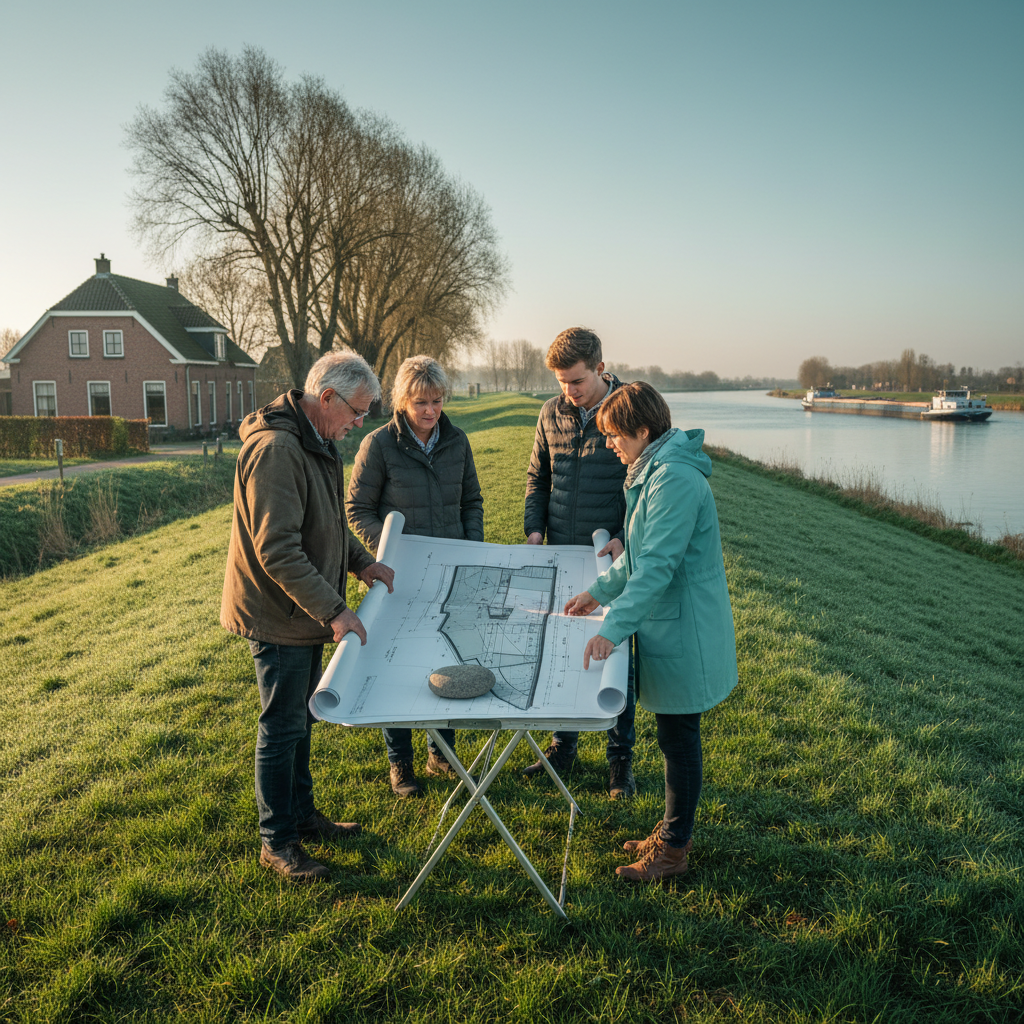
The natural reflex of a technical team that has finished calculating a dike design is to present that design to the community as quickly as possible. To the project team this feels like transparency. To residents it feels like a fait accompli. Experience at Lauwersmeerdijk-Vierhuizergat, the IJsselmeerdijk and the Grebbedijk has shown repeatedly that the first few conversations should not be about solutions, but about concerns, history and how people use the dike. What does this dike mean to people? Where do they walk? Where does the memory of the 1953 flood still live within the family?
Environmental managers who skip this phase pay for it later in formal objections and hardened positions. Time saved up front is almost always an illusion.
2. Make uncertainty explicit, even when it is uncomfortable
Dike reinforcement is a process of designing under uncertainty: the subsoil turns out different, new standards are adopted, sea level projections are periodically updated. The classic mistake is to keep that uncertainty internal “until we know for sure”. That moment never arrives. Residents who later learn that something was already known earlier feel misled, even if the project team itself only knew a few weeks before.
The best HWBP projects communicate uncertainty proactively: “This is what we know now, this is still under investigation, this could mean the design changes at point X.” It is uncomfortable, but it builds the trust that later proves crucial.
3. Co-benefits are not free wins
Dike reinforcement often offers the opportunity to simultaneously develop nature, build a cycle path, create a viewing point or restore a heritage feature. These co-benefits are politically attractive and broaden public support. But they also make the project more complex, more expensive and more vulnerable to delay.
The lesson from recent HWBP projects: choose co-benefits deliberately, with clear ownership and a separate funding stream. A co-benefit without an owner becomes a project risk. A co-benefit without dedicated funding becomes a cut item the moment costs rise, and with it disappears the trust that had been built, in a single board decision.
4. Land acquisition is stakeholder management, not a legal procedure
In many water authorities, land acquisition has historically been a separate column: a land affairs team working with valuers and estate managers, disconnected from the environmental team. At the Dike Workers’ Day this separation was openly questioned. For a farmer or a resident, a conversation about a few metres of land is never merely a business transaction: it is a conversation about identity, legacy and trust in government.
Water authorities that integrate land acquisition with stakeholder management see fewer expropriation proceedings, shorter lead times and, perhaps most importantly, a local governance environment that remains intact after the project ends.
5. Acceleration must not become code for less participation
From 2026 onwards, the HWBP must demonstrably accelerate. That is a political reality. But acceleration is not the same as “talking less to residents”. Experience within the programme shows that acceleration mostly comes from better internal processes, working in parallel rather than sequentially, and starting the environmental analysis earlier, not from shortening consultation rounds.
A Council of State appeal procedure takes on average eighteen months. A single lost appeal consumes the time saved from a shortened consultation round several times over. Environmental managers must keep making this argument at project board level.
6. Present one face to the outside world, even when many parties are involved internally
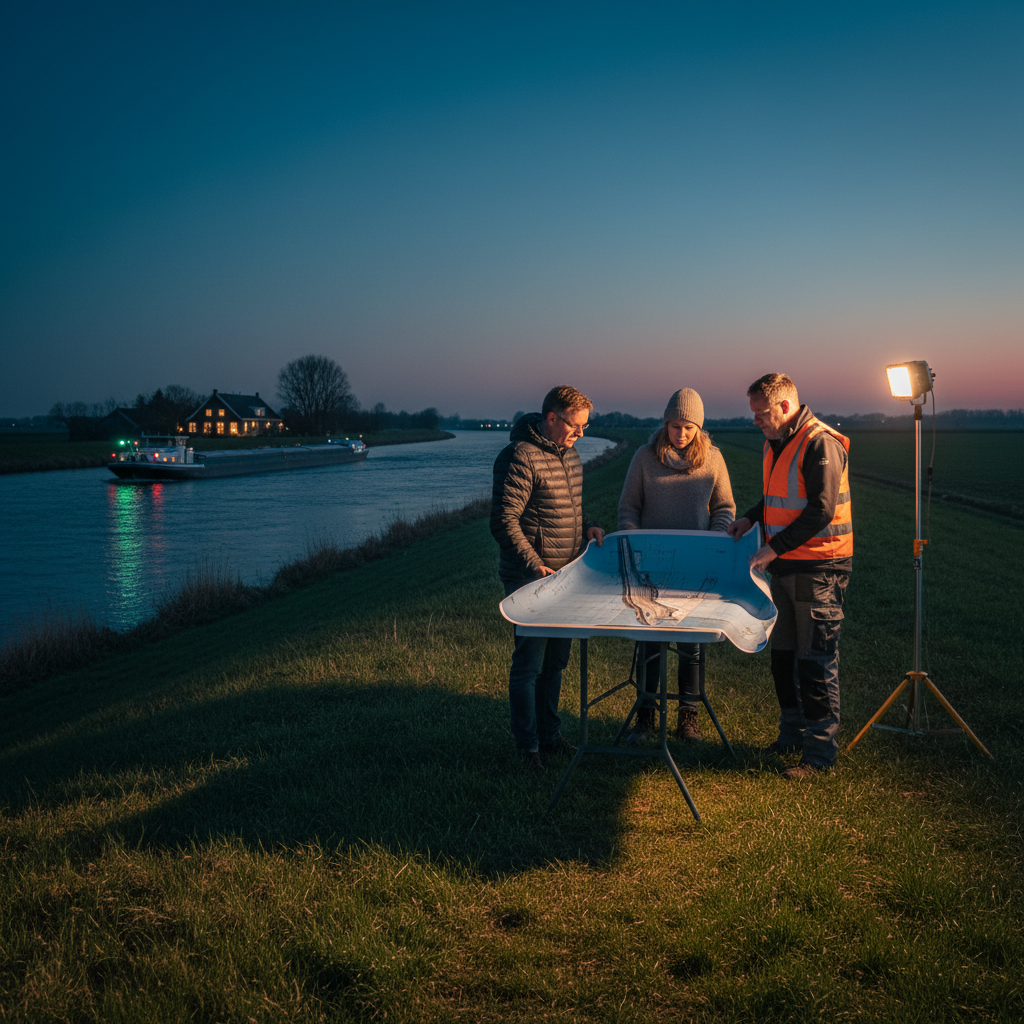
A dike reinforcement project quickly has five to ten formal parties on board: water authority, HWBP programme, provinces, municipalities, Rijkswaterstaat, nature organisations, sometimes a contractor through an early market engagement. For a resident this is impossible to follow, and every contradictory message undermines public support.
The lesson: appoint a single environmental manager as the one and only point of contact, and ensure that all parties use the same core messages. That sounds trivial, but in practice projects constantly leak through individual emails from board members or through statements by contractors in local media. Discipline in external communication is not bureaucracy: it is the one thing that prevents a good project from being shot down by noise.
7. Evaluate when things went well too, and share it
The seventh lesson is perhaps the most important, and the one the HWBP itself emphasised most at the Dike Workers’ Day: lessons must circulate between water authorities. Evaluations are too often written when a project disappointed, and kept quiet when it went well. As a result, success is not shared, and other projects repeat the same mistakes.
The 2026 Project Book contains, for the first time, a more extensive section on practical experience from completed projects, from the Markermeerdijken to the Grebbedijk. That is a step in the right direction. The next step is for environmental managers to receive structural time to look over each other’s shoulders, and for this not to be treated as a luxury but as a precondition for meeting the programme ambition.
In closing
The dike worker of 2026 faces a double challenge: building faster than ever before, in a society more vocal and more distrustful than ever before. That looks like a paradox, but at the Dike Workers’ Day the same answer was formulated again and again: acceleration is not a technical question but a stakeholder question. Water authorities that recognise this and invest seriously in their stakeholder and environmental management will meet the pace. Water authorities that hope the environment will simply come along get stuck in objection procedures.
For stakeholder and environmental managers in the HWBP, the 2026 message is simple: the seven dilemmas are not going away. They only become more visible under pressure. Those who recognise them, name them and handle them professionally make the difference between a dike that is finished on time and a dike that is stuck in procedures for years.